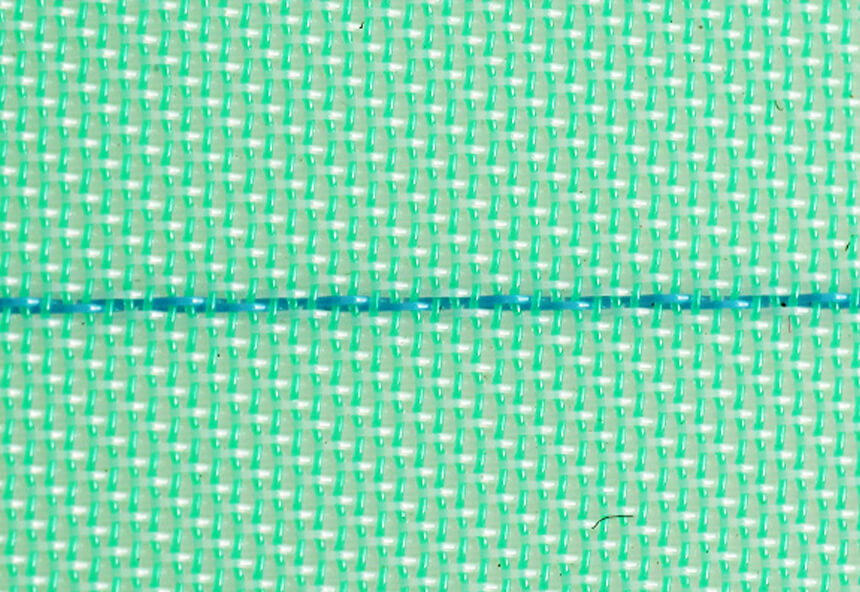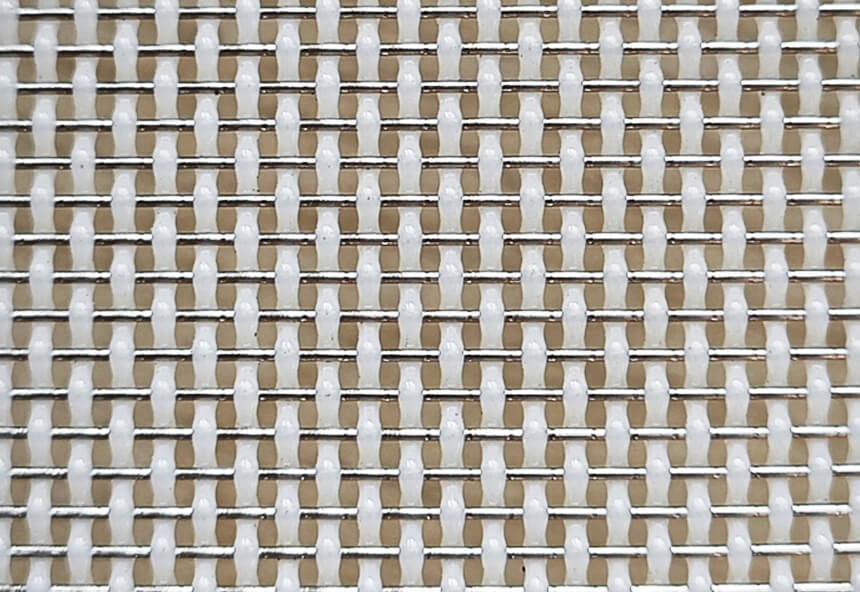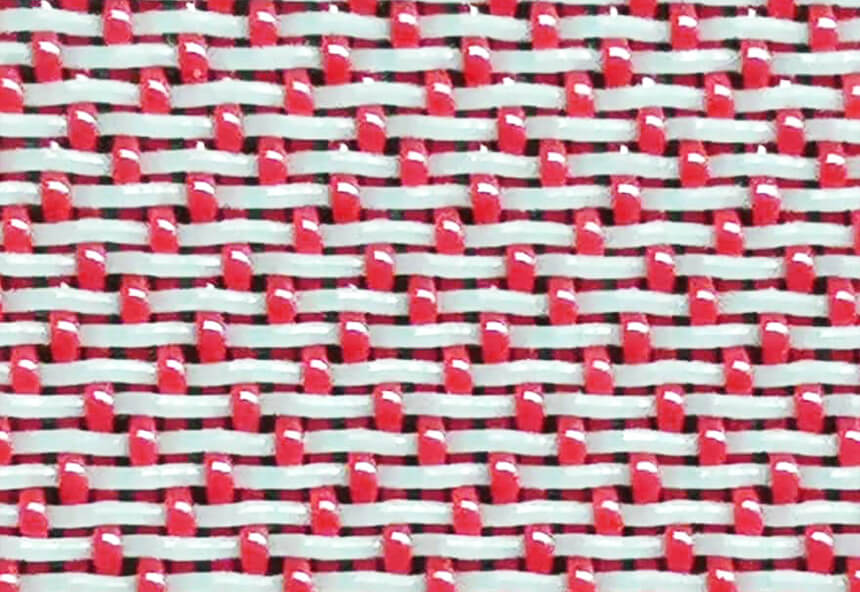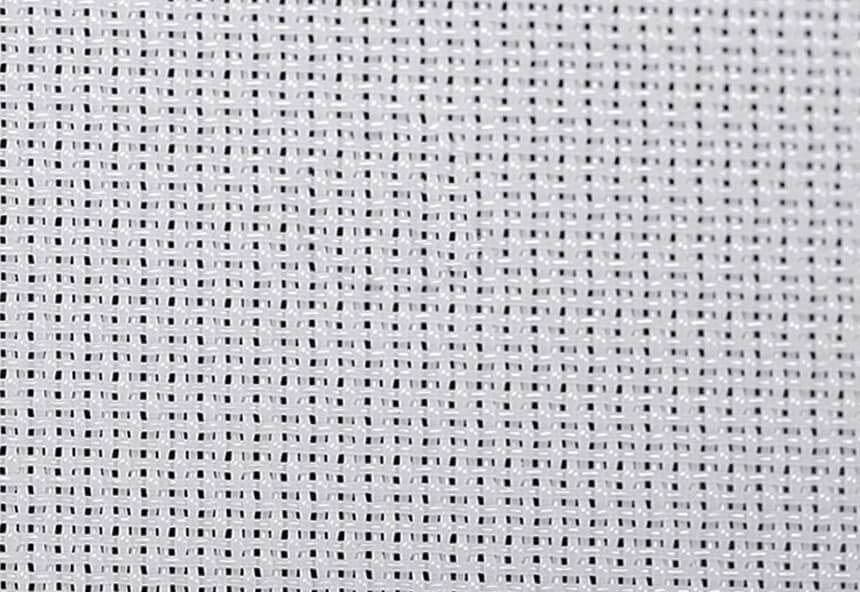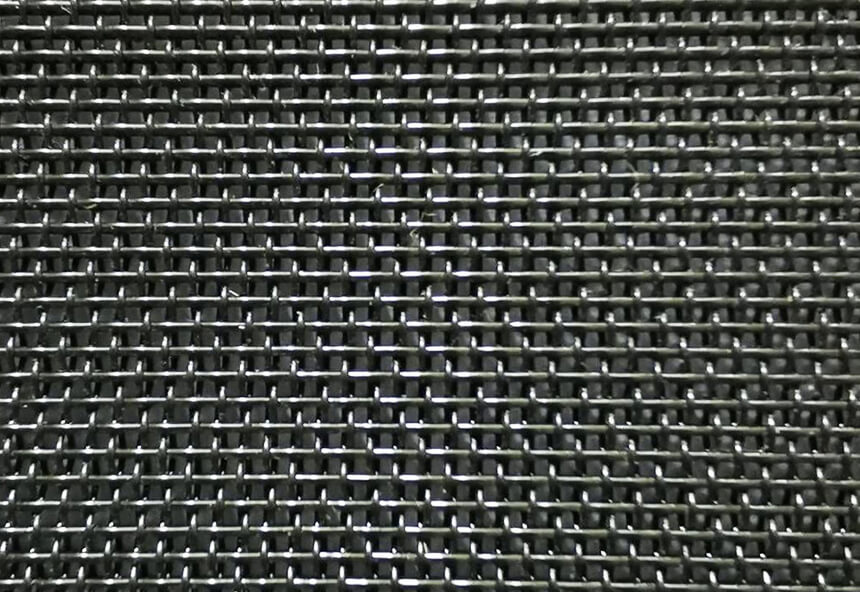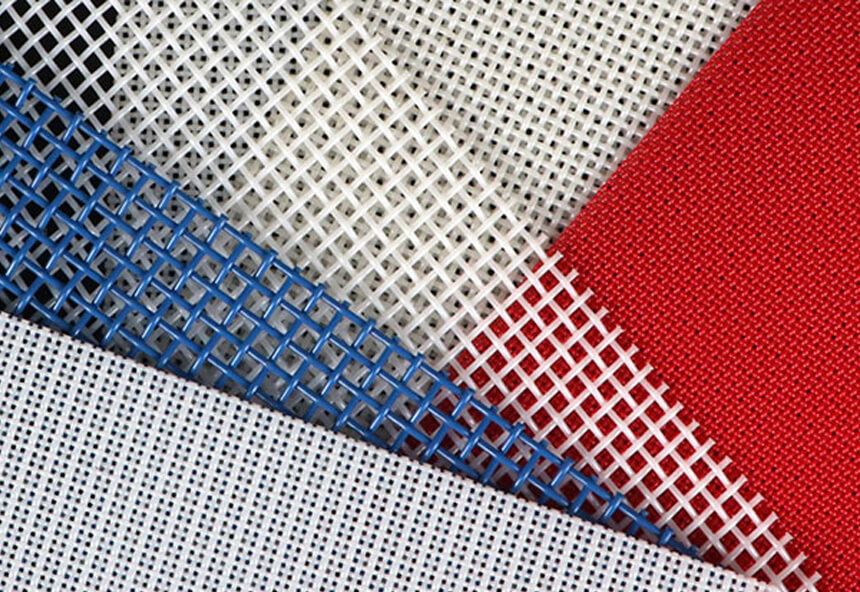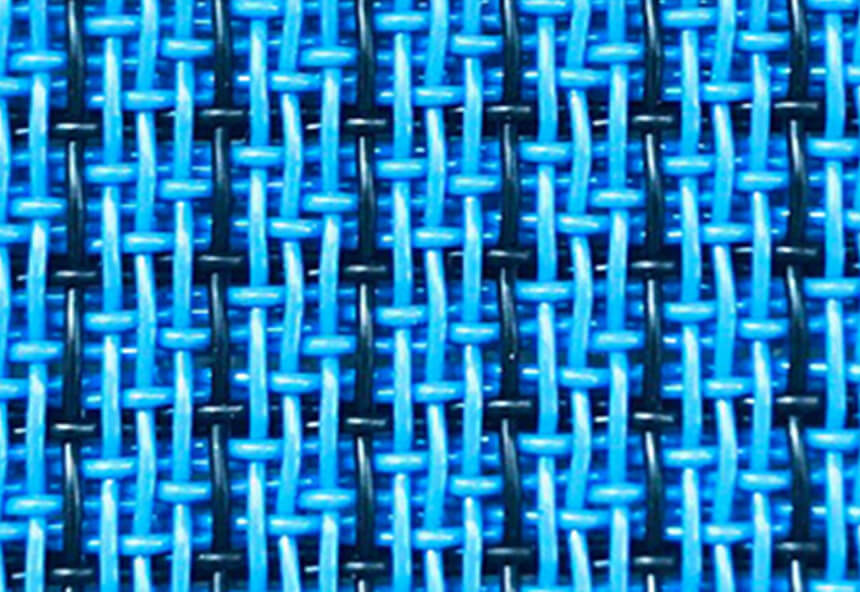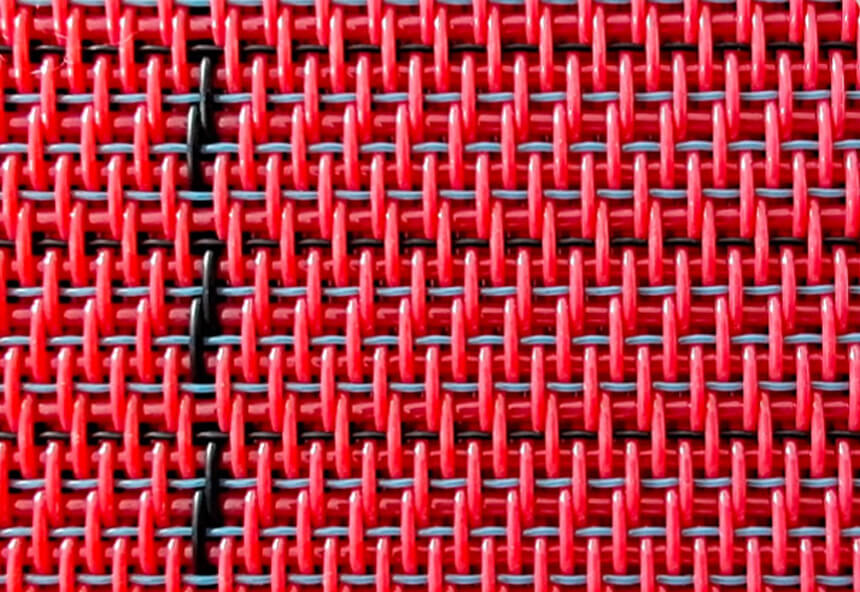
PFM Screen's Polyester Spunlace Mesh Belts are precision-woven hydroentanglement forming and conveyor belts for spunlace nonwoven production lines. These belts deliver the precise forming surface, water drainage rate, and fiber release properties required by wipes, medical, hygiene, filtration, and technical nonwoven producers worldwide.
Description
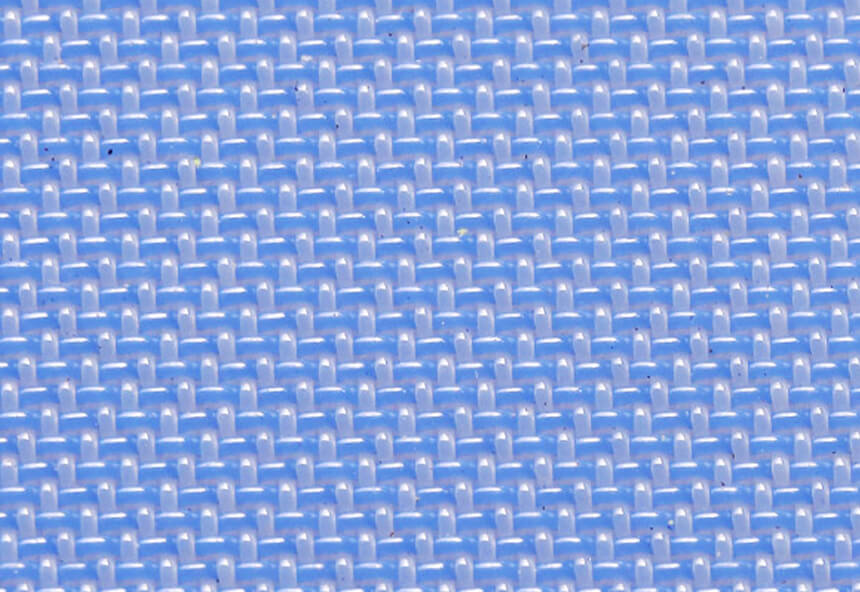
PFM Screen's Polyester Spunlace Mesh Belts are precision-woven industrial forming and conveyor belts engineered for the demanding hydroentanglement (spunlace) nonwoven production process. Manufactured from high-tenacity PET monofilament — with precisely controlled warp and weft diameters and optional anti-static carbon fiber strands — these belts deliver the exact CFM air permeability, surface smoothness, fiber release, and dimensional stability required to produce consistent, defect-free nonwoven fabric at high production speeds.
PFM Screen supplies 12 standard spunlace mesh belt models plus fully custom specifications, covering wire diameters from 0.15 mm to 1.0 mm, air permeability from 303 CFM to 1,574 CFM, and belt widths from 500 mm to over 6,000 mm. Belts are available endless (seam-free) or with spiral/mechanical joining, with sealed edges and optional tracking rails for precise belt alignment on wide production machines.
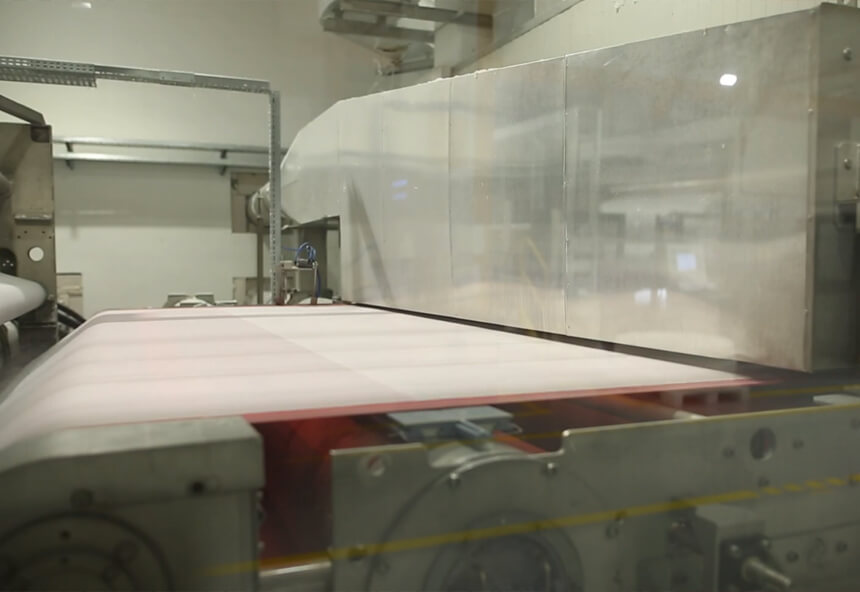
In a spunlace nonwoven production line, the forming mesh belt performs three critical roles simultaneously:
01 Fiber Web Support Carries the opened fiber web at line speed, providing a stable, dimensionally consistent forming surface under high-pressure water jet impingement from the injector manifolds above | 02 Water Drainage Allows pressurized process water to pass through its open mesh structure and drain into the suction box below, enabling effective fiber entanglement and rapid dewatering across the full belt width | 03 Fabric Release Releases the bonded nonwoven fabric cleanly at the belt end without fiber adhesion or marking, preserving fabric surface quality and uniformity for downstream drying and finishing |
The mesh structure of the forming belt also imprints a subtle surface pattern on the nonwoven — belt mesh selection directly affects the fabric's surface texture, bulk, and aesthetics, making it a critical process engineering variable.
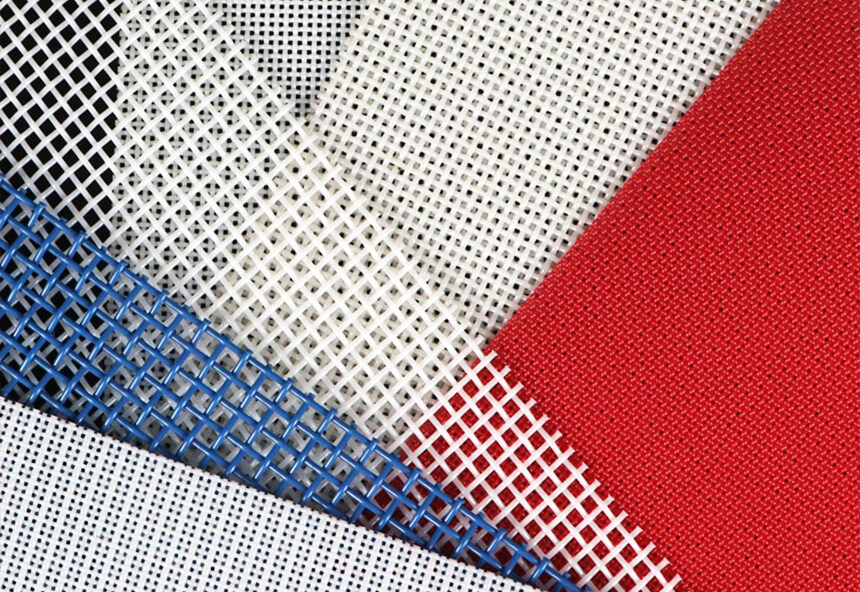 | 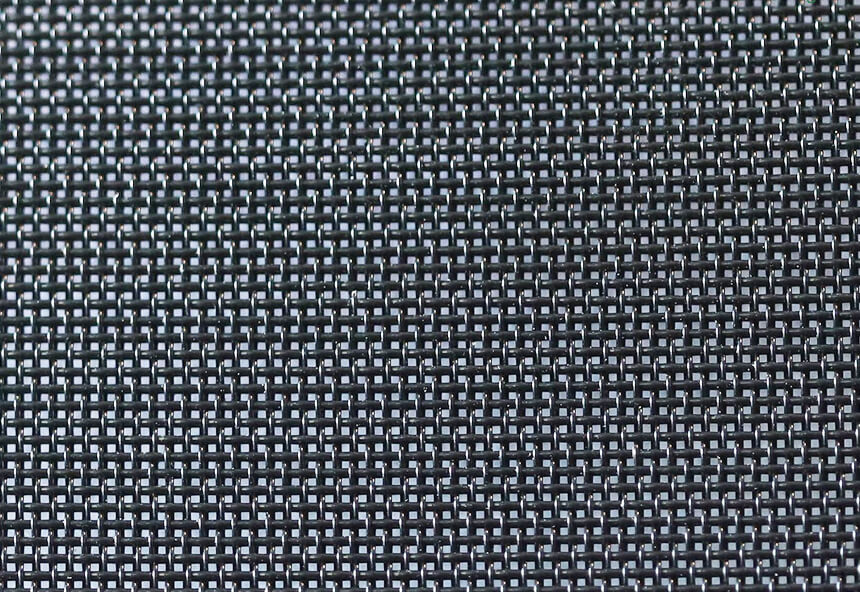 |
Standard Polyester (PET) Belt · Warp and weft in 100% PET monofilament · Wide CFM range: 303 to 1,574 — matched to your fabric weight and line speed · Suitable for viscose, cotton, lyocell, PET/cotton blends, and PLA fiber webs · Excellent surface smoothness and clean nonwoven fabric release · Standard choice for wipes, hygiene, cosmetic, and general nonwoven production | Anti-Static Carbon Fiber Belt — Recommended for High-Speed Synthetic Fiber Lines · Selected weft positions use conductive carbon fiber strands (0.50 mm diameter) · Dissipates electrostatic charge generated at high belt speeds and during PET/PP fiber processing · Eliminates fiber fly, static-induced pinholes, and web instability defects · Required for lines producing synthetic fiber webs at speeds above 150 m/min · Available as PFM-Spunlace-05 (CF weft), PFM-Spunlace-07 (CF warp), PFM-Spunlace-09 (stainless steel weft) |
CFM (cubic feet per minute) air permeability is the primary performance variable when specifying a spunlace mesh belt. It governs how quickly process water drains through the belt during hydroentanglement, which directly determines fiber entanglement quality, fabric weight uniformity, and maximum achievable line speed:
303 Low CFM Fine lightweight fabrics — facial masks, cosmetic wipes, cotton pads, 25–50 gsm | 455–558 Medium CFM General-purpose wet wipes, baby wipes, hygiene fabrics, 50–100 gsm | 659–1,050 High CFM Medical fabrics, industrial wipes, technical nonwovens, 80–200 gsm | 1,242–1,574 Very High CFM Filtration media, automotive nonwovens, geotextile substrates, heavy technical fabrics |
Joining Options · Endless (seamless) — highest surface quality, no join-line imprint on fabric · Spiral joint — field-installable, suitable for most production applications · Mechanical clipper — for high-tension or rapid-replacement-cycle lines | Custom Options · Sealed and reinforced edges — prevents fraying, fiber contamination, and moisture ingress · V-guide tracking rails — ensures precise belt alignment on wide-frame machines · Custom surface coatings — optimizes release for specific fiber types and finishes · Custom belt width to 6,000 mm+ and any circumference — manufactured to your machine drawing |
Need a Spunlace Belt Matched to Your Line? Get a Quote Within 24 Hours Send PFM Screen your line speed, fabric weight (gsm), belt width, fiber type, and machine brand — we will specify the right CFM and model for your hydroentanglement line. WhatsApp: +86 153 6967 9157Email: polyestermesh@pfmscreen.com |
Feature
01 Precision CFM Control Air permeability engineered within tight tolerance — ensures uniform water drainage and consistent fiber entanglement across the full belt width at production speed | 02 High Water Jet Resistance Extra-strength PET monofilament warp yarns resist deformation and fatigue under continuous high-pressure water jet impingement across 12 to 24+ month service cycles | 03 Superior Peelability Dense interlacing points and smooth PET surface ensure clean nonwoven fabric release — no fiber adhesion, no lint build-up on the belt surface between cleaning cycles | 04 Dimensional Stability High MD tensile strength and CD holding force maintain belt geometry under line tension — eliminates belt tracking drift on wide-frame machines and prevents sag between support rolls |
1. Precision-engineered mesh structure — warp/weft diameters, wire density, and weave pattern selected to match your line speed, fabric weight (gsm), and fiber fineness; 12 standard models plus fully custom specifications available 2. High anti-fatigue strength — resists cyclic bending fatigue at the belt nose roll and guide rolls over extended service cycles; special structural design dramatically improves efficiency and service life versus standard industrial conveyor belts 3. Uniform permeability across full belt width — consistent CFM measurement from edge to edge, with no localised drainage variation that would cause fabric weight non-uniformity or entanglement defects 4. High longitudinal and lateral strength — high MD (machine direction) tensile for correct tracking under belt tension; high CD (cross direction) rigidity prevents sag between suction box slots and support rolls 5. Clear and consistent aperture pattern — precisely controlled mesh openings produce a regular, repeatable surface pattern on the nonwoven fabric; pattern is stable across belt lifetime without aperture distortion under tension 6. Dimensional stability under wet/dry cycling — belt maintains shape and aperture dimensions through repeated wet hydroentanglement and heated dryer section cycling without shrinkage or dimensional creep | 7. Non-stick, self-cleaning surface — smooth PET monofilament surface does not retain fiber, lint, or process chemistry, reducing belt cleaning frequency and extending the interval between scheduled belt change-outs 8. Anti-static carbon fiber option — conductive carbon fiber or stainless steel weft strands dissipate electrostatic charge on high-speed PET/PP synthetic fiber lines, eliminating static-induced web breaks, fiber fly, and weight variation defects 9. Custom patterned forming surfaces — PFM Screen can produce belts with custom aperture and emboss patterns for decorative wipes, apertured cotton pads, structured filtration fabrics, and specialty technical nonwovens 10. Sealed edge reinforcement — encapsulated edges prevent edge fraying, fiber contamination, and moisture ingress into the belt body during continuous wet hydroentanglement operation 11. V-guide tracking rail option — bonded V-guides ensure reliable belt alignment on wide ANDRITZ Jetlace, Truetzschler AquaJet, and equivalent production lines without manual tracking adjustment 12. Manufactured to machine drawing — supply your roller diameters, belt path circumference, and machine frame width; PFM Screen manufactures the belt to fit your specific machine geometry with no modification required |
Discuss Your Line Requirements With Our Technical Team Our engineers will specify the correct model, CFM, yarn type, and belt configuration for your spunlace production line — at no cost, with a response within 24 hours. WhatsApp: +86 153 6967 9157Email: polyestermesh@pfmscreen.com |
Application
PFM Screen's spunlace mesh belts support the full spectrum of hydroentanglement nonwoven production — from ultra-light 25 gsm cosmetic wipes to heavy-duty 400 gsm automotive filtration substrates. The forming belt model, CFM rating, and surface configuration are selected to match each specific end product and machine type.
Wet Wipes — Consumer & Industrial Baby wipes, facial wipes, body wipes, household cleaning wipes, disinfection wipes, and industrial maintenance wipes. Requires medium CFM belts (455–560) with consistent surface pattern and excellent fiber release. Most common application for spunlace mesh belts globally. | Medical & Surgical Nonwovens Wound dressings, surgical drapes, sterile wipes, medical gowns, and protective barrier fabrics. Requires low to medium CFM with a clean, smooth forming surface — no contamination of the product surface from belt yarns or edge fraying. | Cosmetic & Facial Care Products Cotton pads, facial masks, skin care sheets, and makeup removal wipes. Requires fine mesh belts (lowest CFM range, 303–471) with very smooth surface to avoid visible pattern imprint on delicate lightweight fabrics (25–50 gsm). |
Filtration Media Air filtration fabrics, liquid filtration substrates, HEPA pre-filter layers, and industrial filter media. Requires high-CFM belts (1,050–1,574) for heavier fabric weights — open mesh structure supports high-gsm fabric formation at the required line speed. | Automotive Nonwovens Acoustic insulation panels, trunk liners, battery separator substrates, and cabin air filter materials. Heavy fabric weights (120–400 gsm) require very high CFM forming belts and robust high-tension belt construction with reinforced edges. | Artificial Leather & Technical Textiles Spunlace base substrates for PU-coated artificial leather, geotextile base layers, composite technical textiles. Requires structured belt surface to impart precise micro-texture to the fabric base layer — custom patterned belt available. |
 |  |
Hygiene ProductsMedical & HealthcarePersonal Care & CosmeticsAir & Liquid FiltrationAutomotive InteriorsTechnical TextilesArtificial LeatherGeotextiles
PFM Screen's spunlace mesh belts are manufactured to the roller dimensions and belt path specifications of all major hydroentanglement line OEMs. Share your machine model or technical drawing and PFM Screen will confirm belt width, circumference, and joining specifications.
| Machine OEM | Line / System | Typical Application | Recommended Belt Type |
| ANDRITZ Perfojet | Jetlace 3000, Jetlace Evolution, Jetlace CottonPad, neXline spunlace | Wipes, cotton pads, medical fabrics, technical nonwovens | PFM-Spunlace-01/02/04 (wipes & pads); 06/08 (technical fabrics); 05/07 anti-static for synthetic fiber lines |
| Truetzschler Nonwovens (Fleissner) | AquaJet Spunlace System | Hygiene fabrics, wet wipes, filtration substrates | PFM-Spunlace-02/10/11 — confirm line width and roller spec with PFM Screen |
| Autefa Solutions | Hydro4Web, hydroentanglement injection system | Nonwoven fabrics, technical textiles, composites | Custom specification to machine roller diameter and frame width |
| Allimand / Interweb | Spunlace and wetlace production lines | Specialty nonwovens, paper-nonwoven composites | Low to medium CFM models — confirm full specification with PFM Screen |
| AZX Machinery / Foshan AZX | Chinese-market hydroentanglement lines | Hygiene, wipes, geotextile nonwovens | Full model range available — supply roller diameter and frame spec for exact fit |
| Other / Custom Lines | Any hydroentanglement production line | All spunlace nonwoven applications | PFM Screen manufactures to any machine drawing — submit spec for quotation within 24 hours |
Tell Us Your Machine Brand and Production Requirements PFM Screen's technical team will confirm belt model, CFM, width, and joining specification for your specific machine — response within 24 hours. WhatsApp: +86 153 6967 9157Email: polyestermesh@pfmscreen.com |
Specifications
| Model | Warp Wire | Weft Wire | Warp Density (/cm) | Weft Density (/cm) | Thickness (mm) | Weight (g/m2) | CFM |
| PFM-Spunlace-01 | 0.30 PET | 0.30 PET | 16.5 | 16.5 | 0.50 | 358 | 471 |
| PFM-Spunlace-02 | 0.25 PET | 0.25 PET | 23 | 21 | 0.57 | 322 | 549 |
| PFM-Spunlace-03 | 0.25 PET | 0.38 PET | 22 | 20 | 1.27 | 608 | 1,242 |
| PFM-Spunlace-04 | 0.15 PET | 0.20 PET | 40 | 30.7 | 0.30 | 235 | 303 |
| PFM-Spunlace-05 * | 0.50 PET | 0.50 CF + 0.60 PET | 22 | 13 | 1.99 | 1,138 | 659 |
| PFM-Spunlace-06 | 1.00 PET | 1.00 PET | 2.7 | 2.7 | 2.40 | 592 | 1,574 |
| PFM-Spunlace-07 * | 0.50 CF | 0.60 PET | 20 | 8 | 1.55 | 921 | 593 |
| PFM-Spunlace-08 | 0.40 PET | 0.40 PET | 12.2 | 12.2 | 0.76 | 441 | 558 |
| PFM-Spunlace-09 ** | 0.50 PET | 0.40 SS | 9.5 | 10.5 | 1.20 | 1,272 | 1,050 |
| PFM-Spunlace-10 | 0.22 PET | 0.35 PET | 29.5–30.5 | 16.5–17.5 | 0.81 | 510 | 455 |
| PFM-Spunlace-11 | 0.22 PET | 0.25 PET | 29.5 | 22 | 0.56 | 330 | 508 |
| PFM-Spunlace-12 *** | 0.24 PET | 0.45 PET + 0.47 PA | 29.5–30.5 | 14.5–15.5 | 0.99 | 470 | 415 |
* CF = Carbon fiber conductive strand (anti-static). Models 05 and 07 use carbon fiber for static dissipation on high-speed PET/PP synthetic fiber lines. ** SS = Stainless steel weft strand (anti-static alternative). *** PA = Polyamide (nylon) weft strand. Custom specifications, widths, and belt circumferences available. All specifications subject to manufacturing tolerances — contact PFM Screen for confirmed dimensional data.
Q1: What is a spunlace mesh belt and what role does it play in a hydroentanglement nonwoven line? A spunlace mesh belt — also called a hydroentanglement forming belt or spunlace conveyor belt — is a precision-woven polyester monofilament belt that serves as the forming surface in a spunlace nonwoven production line. It carries the loose fiber web at line speed beneath the high-pressure water jet injectors, allows process water to drain through its open mesh structure, and releases the bonded nonwoven fabric cleanly at the belt end. The mesh structure, CFM rating, and surface profile of the belt directly influence fabric weight uniformity, surface texture, and maximum achievable production speed — making belt selection a critical process engineering decision for every spunlace line. |
Q2: How do I choose the right CFM air permeability for my spunlace line? CFM selection depends on three variables: fabric weight (gsm), line speed (m/min), and fiber type. For lightweight fabrics (25–50 gsm) such as facial wipes and cosmetic masks, low-CFM belts (303–471) are used — finer, denser mesh supports the fiber web and prevents water jet breakthrough. For medium-weight fabrics (50–100 gsm) such as baby wipes and hygiene nonwovens, medium-CFM belts (455–560) are standard. For heavier technical fabrics (100 gsm and above) including filtration media, automotive nonwovens, and artificial leather substrates, high-CFM belts (659–1,574) are required to drain water efficiently at the required line speed. PFM Screen's technical team will calculate your optimal CFM target once you provide fabric weight, line speed, and fiber specification. |
Q3: What is the difference between a standard PET spunlace belt and an anti-static carbon fiber spunlace belt? Standard PET spunlace belts are woven entirely from polyester monofilament and are suitable for most hydroentanglement applications including viscose, cotton, lyocell, and PET/cotton blend fiber webs. Anti-static belts (PFM-Spunlace-05, 07) incorporate conductive carbon fiber strands in selected warp or weft positions to dissipate electrostatic charge that builds up during high-speed processing of synthetic fiber webs (100% PET, PP, or PA). At line speeds above 150 m/min, static charge can cause fiber fly, web instability, pinholes, and weight variation defects. PFM-Spunlace-09 uses stainless steel weft as an alternative anti-static solution for applications where carbon fiber is not preferred. Specify which model is best for your fiber type, line speed, and machine grounding configuration when contacting PFM Screen. |
Q4: Are PFM Screen spunlace belts compatible with ANDRITZ Jetlace and Truetzschler AquaJet lines? Yes. PFM Screen manufactures spunlace mesh belts to the exact roller diameters, belt width, and circumference specifications of all major hydroentanglement line OEMs — including ANDRITZ Perfojet (Jetlace 3000, Jetlace Evolution, Jetlace CottonPad, neXline spunlace), Truetzschler Nonwovens / Fleissner (AquaJet), Autefa Solutions, Allimand, and AZX Machinery lines. To confirm dimensional fit, please provide the machine model, roller diameter, frame width, and belt path circumference when requesting a quotation. PFM Screen can also work from machine drawings or from measurements taken from your existing worn belt. |
Q5: Which fiber types can PFM Screen spunlace mesh belts process? PFM Screen's spunlace forming belts are compatible with all commercially used hydroentanglement fiber types, including: viscose (rayon), cotton, polyester (PET), polypropylene (PP), lyocell (Tencel), bamboo, microfiber blends, and composite PET/viscose or PET/cotton blend webs. The key variable is fiber fineness and web weight — finer fibers require finer mesh belts (lower CFM) to prevent fiber loss through the belt apertures during hydroentanglement. For synthetic fiber webs processed at high line speed, anti-static belt models (05, 07, or 09) should be specified to prevent static-induced defects. |
Q6: How do I choose between endless, spiral joint, and mechanical joining for my spunlace belt? Endless (seamless) belts are the premium choice for spunlace applications — the absence of a join line eliminates periodic mark-off on the nonwoven fabric surface, which is critical for lightweight cosmetic and medical fabrics. Spiral joint belts are practical when the machine layout does not allow endless installation, and are suitable for medium-weight and technical fabric applications where a faint join line in the fabric is acceptable. Mechanical clipper joining is used for very high-tension or large-roll machines where in-place belt replacement must be done rapidly without machine disassembly. PFM Screen will recommend the most suitable joining method based on your fabric quality requirements, machine geometry, and maintenance schedule. |
Q7: Can PFM Screen supply patterned or apertured spunlace forming belts for patterned nonwoven fabrics? Yes. PFM Screen can manufacture spunlace forming belts with custom weave patterns — including embossed aperture structures, decorative mesh configurations, and high-open-area patterned surfaces — for lines producing patterned wipes, apertured cotton pads, or structured technical fabrics. The belt pattern directly imprints on the hydroentangled fabric, so pattern geometry, aperture size, and surface profile are engineered to your specific product specification. Share your target fabric pattern or product sample and PFM Screen will assess feasibility and provide a sample belt production offer. |
Q8: What information do I need to provide to order a spunlace mesh belt from PFM Screen? To provide a complete quotation within 24 hours, PFM Screen requires: (1) Machine OEM and model (e.g., ANDRITZ Jetlace 3000, Truetzschler AquaJet); (2) Belt width (mm) and circumference/length; (3) Target CFM or existing belt model number; (4) Fiber type and fabric weight range (gsm); (5) Line speed (m/min); (6) Joining type preference (endless, spiral, or mechanical); (7) Anti-static requirement and estimated static voltage if known; (8) Quantity and delivery destination. If replacing an existing belt, sending a photo of the current belt's label or weave structure allows PFM Screen to identify the exact replacement specification. Contact us via WhatsApp (+86 153 6967 9157) or email (polyestermesh@pfmscreen.com). |
Ready to Order? Get a Full Technical Quotation Within 24 Hours Send PFM Screen your machine model, belt width, fiber type, fabric weight, and quantity — we will confirm the specification and price within one business day. WhatsApp: +86 153 6967 9157Email: polyestermesh@pfmscreen.com |